How to Choose a cGMP-Compliant Liquid Filling Line for Pharmaceuticals & Oral Drops
Essential engineering criteria for Schedule M and US FDA cGMP liquid packaging compliance.
Filltech Application Engineering Blueprints · Wagle Estate, Thane
Executive Engineering Brief
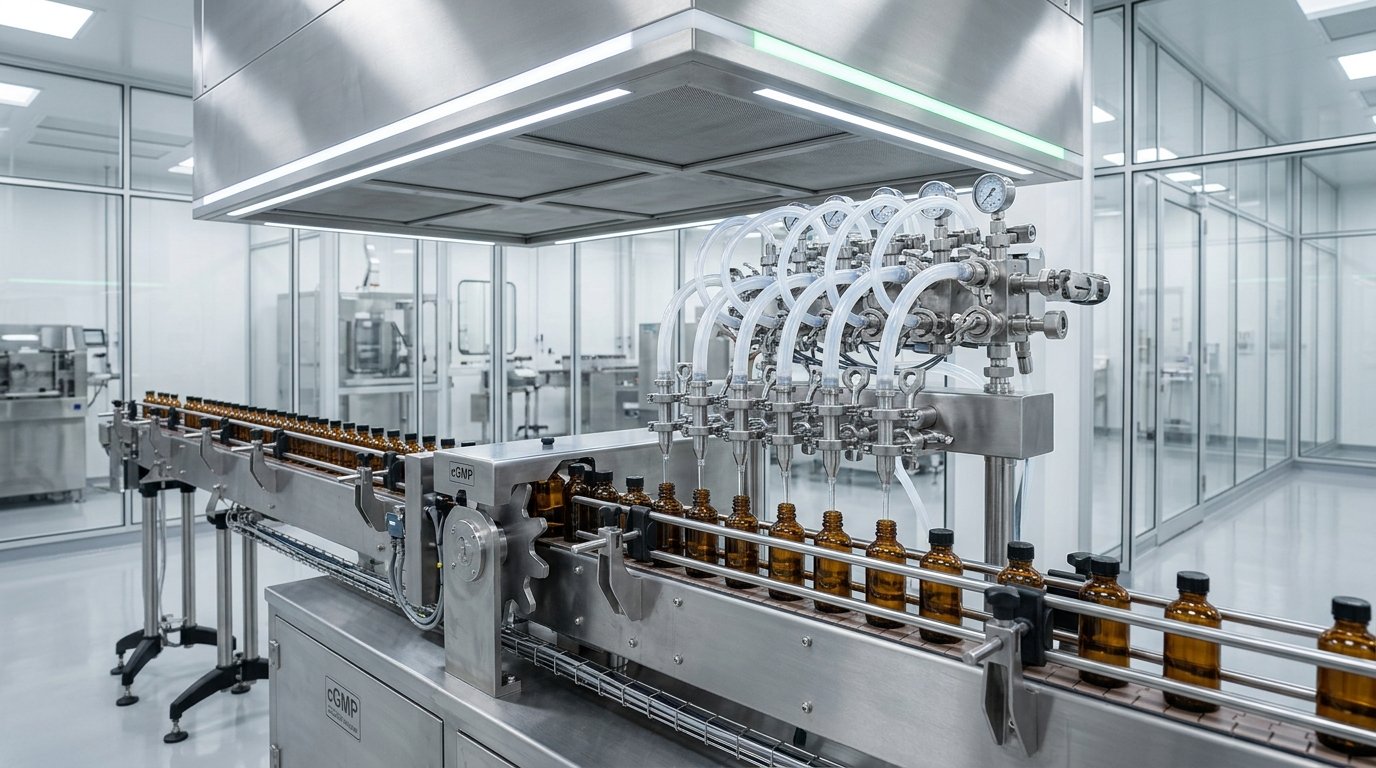
Pharmaceutical bottling demands zero cross-contamination, sanitary SS 316L metallurgy, laminar airflow compatibility, and clean-in-place validation. Here is what engineering teams look for.
1. Metallurgy & Contact Part Certification (SS 316L vs SS 304)
In pharmaceutical formulation packaging, every component touching the drug substance must be certified SS 316 or SS 316L with electropolished or mirror-finished surface roughness (Ra < 0.4 µm).
- Wetted parts (Syringes, manifolds, nozzles, shut-off needles): Certified SS 316 / 316L with full mill test certificates.
- Non-wetted structures (Main frame, base cladding, electrical panels): SS 304 with matt / satin hairline finish to prevent bacterial retention.
- Elastomers & Gaskets: US FDA 21 CFR § 177.2600 compliant Silicone, Viton, or PTFE seals.
2. Bottom-Up Diving Nozzles & Anti-Drip Control
Oral liquids and syrups often contain sugar bases or foaming surfactants. Standard static nozzles cause surface turbulence and micro-bubbles that lead to neck wetting and volume inaccuracies.
- Bottom-Up Diving Cycle: Nozzles descend to the base of the bottle before filling commences, and retract synchronously as the liquid level rises, keeping the nozzle tip submerged just beneath the surface.
- Positive Pneumatic Cut-Off: Shuts the nozzle orifice instantaneously at the end of the stroke with zero droplet lag.
3. When to Choose Peristaltic Dosing for Sterile Formulations
For ophthalmic solutions (eye drops), diagnostic reagents, and sterile injectables, mechanical pistons and valves introduce friction and seal wear risks. Peristaltic liquid fillers eliminate all valves and mechanical seals by confining the liquid inside pre-sterilized platinum-cured silicone tubing.
4. Validation Documentation (DQ, IQ, OQ Protocol Support)
Reputable pharmaceutical machinery manufacturers supply comprehensive validation packages to support regulatory audits: Design Qualification (DQ), Installation Qualification (IQ), Operational Qualification (OQ), and Material Test Certificates.
Recommended Filltech Machines For This Application
Precision engineered and manufactured at our Wagle Estate, Thane facility:
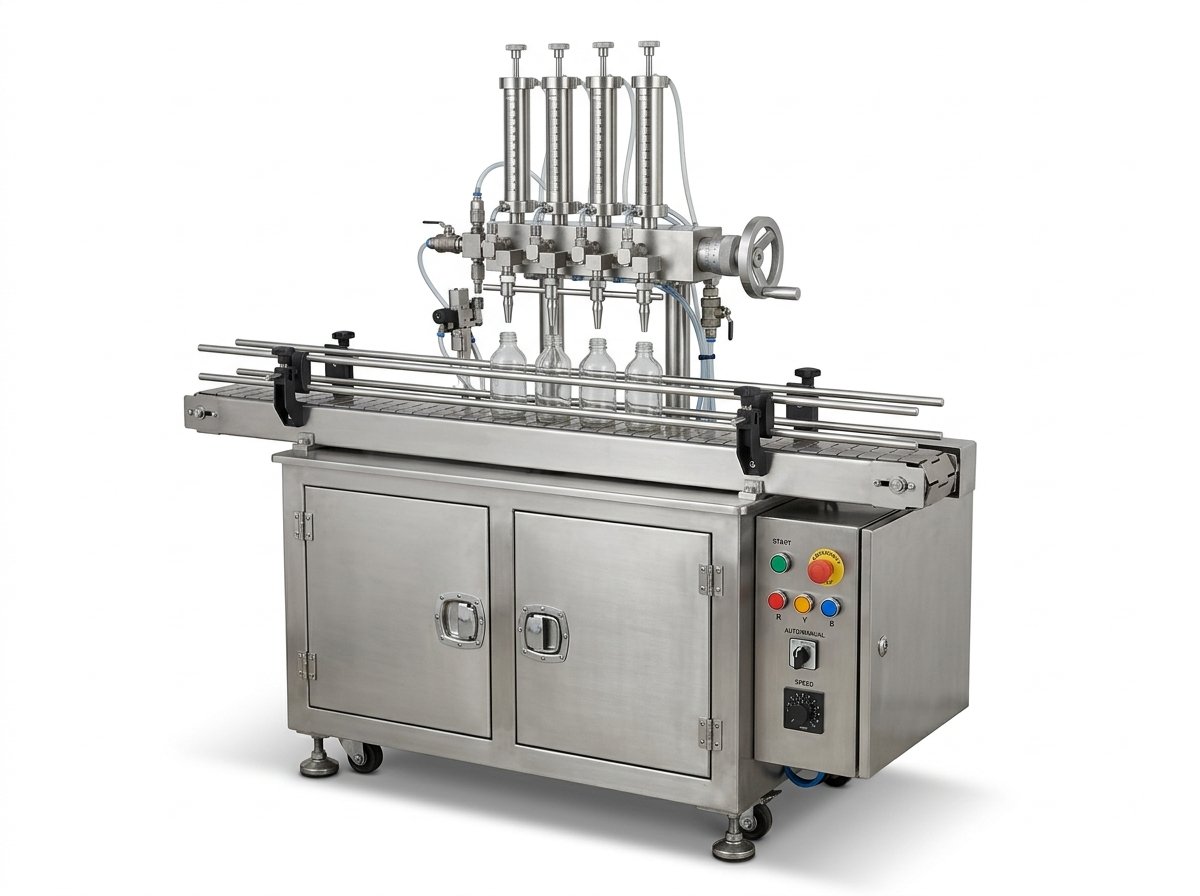
Automatic Volumetric Liquid Filling Machine
SS slat conveyor, diving-nozzle system and indexing mechanism for continuous inline filling with high accuracy.
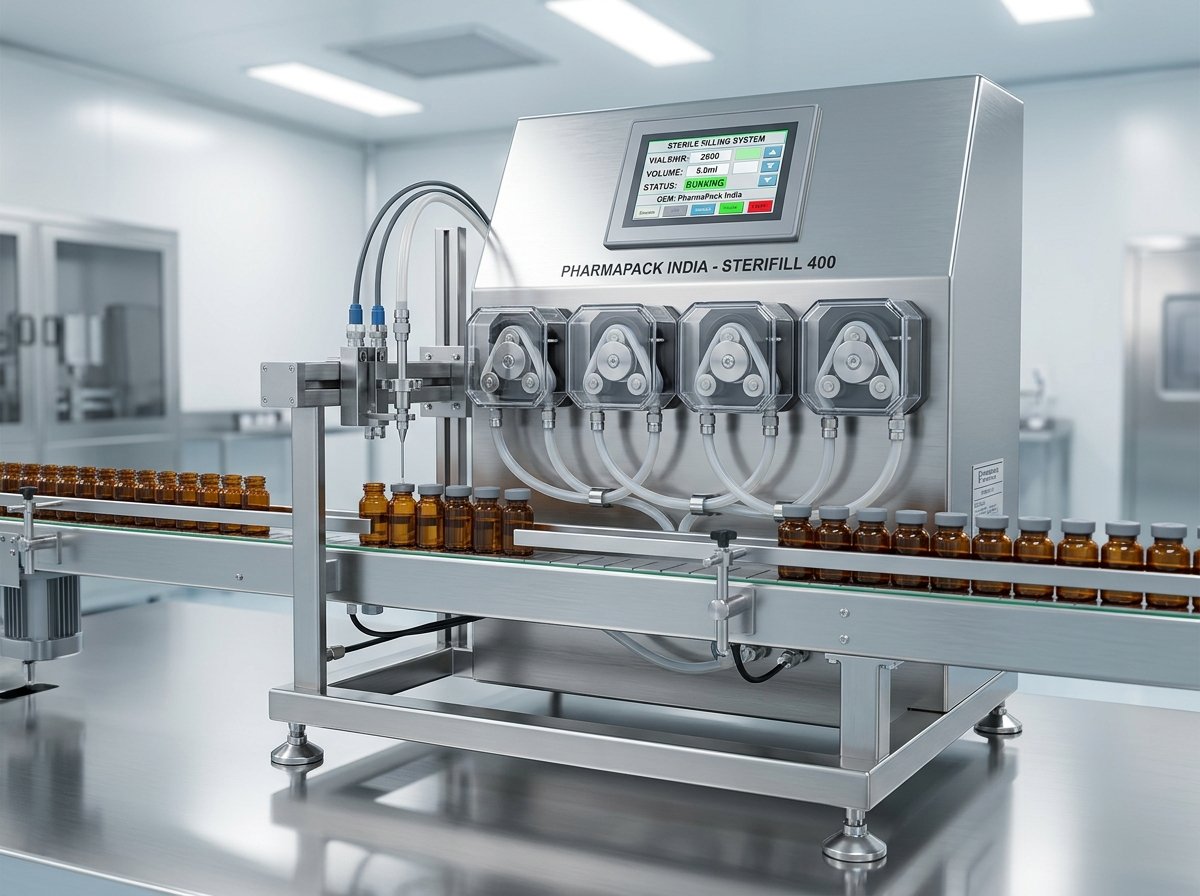
Peristaltic Liquid Filling Machine
Tube-based, contact-free fill path for sterile, WFI and small-dose pharma applications. Easy CIP/SIP.
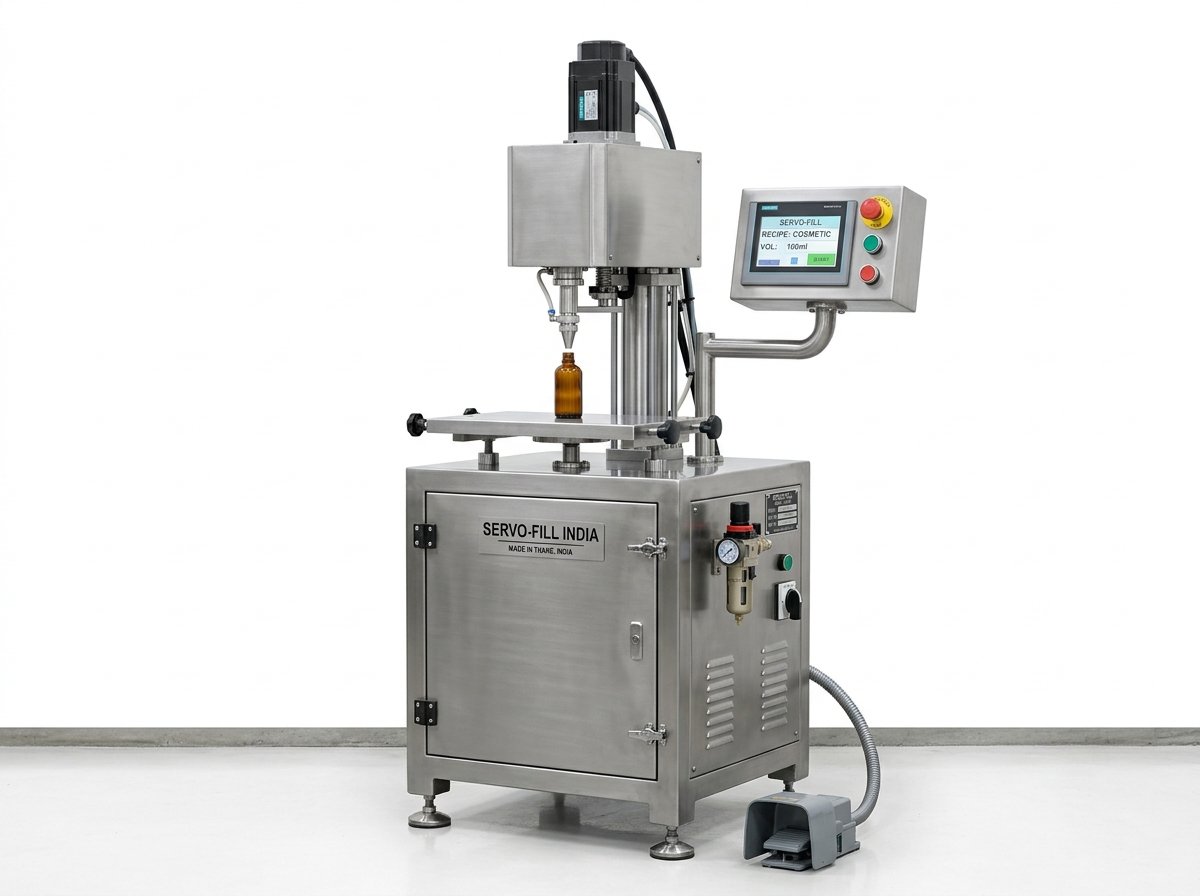
Servo Single-Head Liquid Filler
Servo-driven flow control for fast changeovers across a wide volume range on a compact footprint.
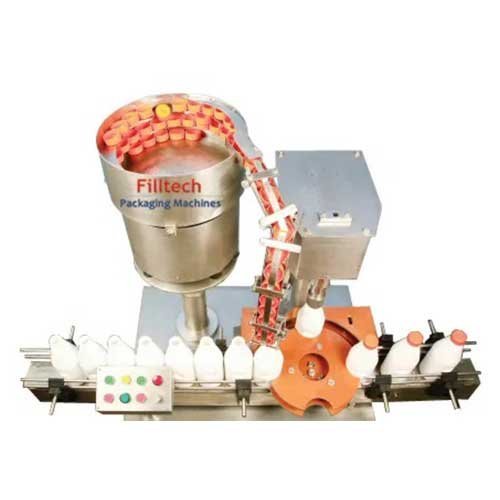
Automatic Capping & Sealing Machine
Robust rotary capping machine complete with Filltech vibratory cap feeder bowl, starwheel container indexing plate, and synchronized SS slat conveyor.
Read Next Engineering Guides
Send us your fill spec. We will recommend the right machine.
Share your product, container and target output: our engineers will reply with a shortlisted machine and quote.